
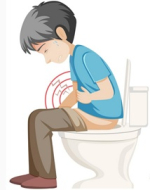
 Een bijna onvermijdelijk gevolg van antibiotica is diarree. Dit komt doordat antibiotica niet alleen ziekmakende bacteriën in het lichaam aanvallen, maar bij passage in de darm ook de darmflora doden. En dit veroorzaakt meestal diarree. Pre- en probiotica zijn het beste middel om de darmflora weer snel op te bouwen. Vroeger werd aangeraden daar pas mee te beginnen na het stoppen van de antibiotica, omdat deze de goede bacteriën in de probiotica toch weer zouden doden. Verloren moeite dus?
Heel wat studies bevestigen dat dit toch niet klopt, vooral omdat tijdens de antibioticakuur ziekmakende microben én schimmels hun kans schoon zien om de darm te koloniseren. En dat gaat dan vaak om gevaarlijke beestjes, zoals Clostridium, die meestal zeer resistent is en óók diarree veroorzaakt.
Daarom wordt nu aangeraden altijd betrouwbare probiotica te gebruiken tijdens en na een antibioticakuur (innames afwisselen). Op basis van wetenschappelijke studies worden vooral Lactobacillus rhamnosus en boulardii aangeraden.
Referenties:
Szajewska H, Kolodziej M. Systematic review with meta-analysis: Lactobacillus rhamnosus GG in the prevention of antibiotic-associated diarrhoea in children and adults. Aliment Pharmacol Ther. 2015 Nov;42(10):1149-57.
Szajewska H et al. Probiotics for the Prevention of Antibiotic-Associated Diarrhea in Children. J Pediatr Gastroenterol Nutr. 2016Mar;62(3):495-506.
Goldenberg JZ, Lytvyn L, Steurich J, Parkin P, Mahant S, Johnston BC. Probiotics for the prevention of pediatric antibiotic-associated diarrhea.Cochrane Database Syst Rev2015, Issue 12. Art. No.: CD004827. http://dx.doi.org/10.1002/14651858.CD004827.pub4.
£ukasik J, Szajewska H. Effect of a multispecies probiotic on reducing the incidence of antibiotic-associated diarrhoea in children: a protocol for a randomised controlled trial. BMJ Open. 2018 Jun 4;8(5):e021214.
Goldenberg JZ, Mertz D, Johnston BC. Probiotics to prevent clostridium difficile infection in patients receiving antibiotics. JAMA. 2018 Aug 7;320(5):499-500
Bron: ABC Gezondheid